Loose Dental Implant? Here’s What Causes It and What to Do Next


Feeling a wobble where your implant used to feel rock solid is unsettling. It is understandable to be concerned, and the good news is that movement does not automatically mean the implant has failed.
Most of the time, the part that moves is the crown on top or the small screw holding it in place. Those are mechanical problems with straightforward fixes.
When the titanium post inside the bone moves, the situation is more urgent, because that movement points to a problem with the bone or gum support around it.
You cannot tell at home which part is moving, so the safest step is to stop chewing on that side and call your dentist for an exam and X-ray within a day or two.
Dental implants are one of the most reliable ways to replace missing teeth, and catching a problem early usually gives you more repair options and fewer surprises.
Key Takeaways
- Movement in the crown or abutment screw is common and often repairable in a single visit.
- A post that moves inside the bone signals a support problem and needs prompt evaluation.
- Imaging and a bite check tell your dentist whether the cause is mechanical, infectious, or bone related.
What Should You Do When an Implant Feels Loose?
Protect the area, keep it clean, and get it looked at quickly. A loose dental implant rarely settles down on its own, and continued pressure on a moving part can turn a small repair into a larger one.
Stop Chewing on the Affected Side
Shift all chewing to the opposite side until you are seen. Every bite on a moving component puts stress on the screw threads and the bone around the implant.
Soft foods help. Skip crusty bread, tough meat, ice, and anything sticky that could pull the crown free.
Keep brushing gently around the area. A water flosser on a low setting or a soft interdental brush helps you clear food debris without prying at the restoration, and steady oral hygiene keeps gum inflammation from getting worse while you wait.
Do Not Wiggle, Glue, or Tighten It at Home
Resist the urge to test the movement with your tongue or fingers. Repeated wiggling loosens the connection further and can damage the threads inside the implant.
Never use household glue, denture adhesive, or over-the-counter cement. These products trap bacteria, complicate removal, and can permanently ruin a crown that was otherwise reusable.
Home tools cannot tighten an abutment screw correctly. Implant screws require a specific torque setting, and hand-tightening either leaves it loose or snaps the screw.
When to Seek Same-Day Dental Care
Call for same-day care if you have swelling, throbbing pain, bleeding gums, pus, a persistent bad taste, or a crown that has come off entirely. Those signs suggest infection or a fully detached component, which is a dental emergency worth handling right away.
Visible movement of the implant itself, or a change in how your bite feels overnight, also deserves an urgent call.
Our team at Legacy Dental Studio can often fit implant concerns into the schedule quickly, and our guide to what to do in a dental emergency walks through how to handle the hours before your appointment.
Is the Crown, Abutment, or Implant Post Moving?
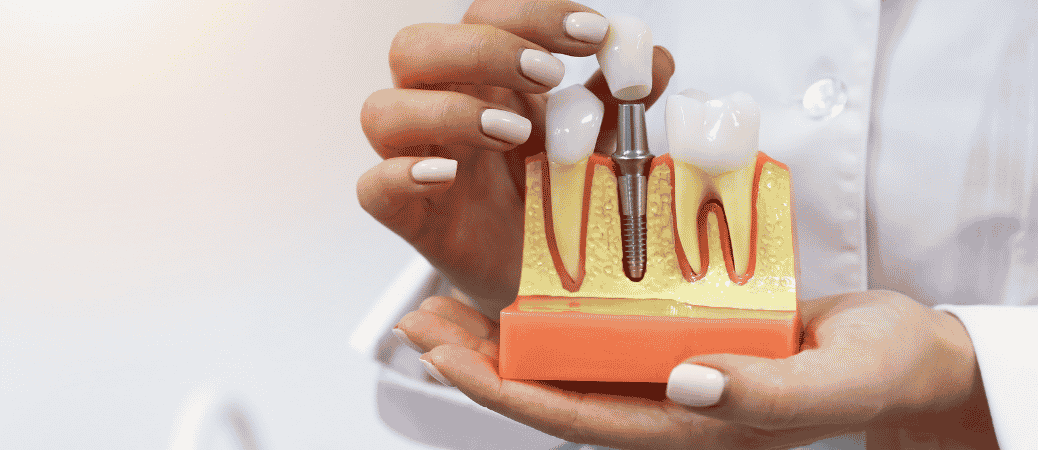
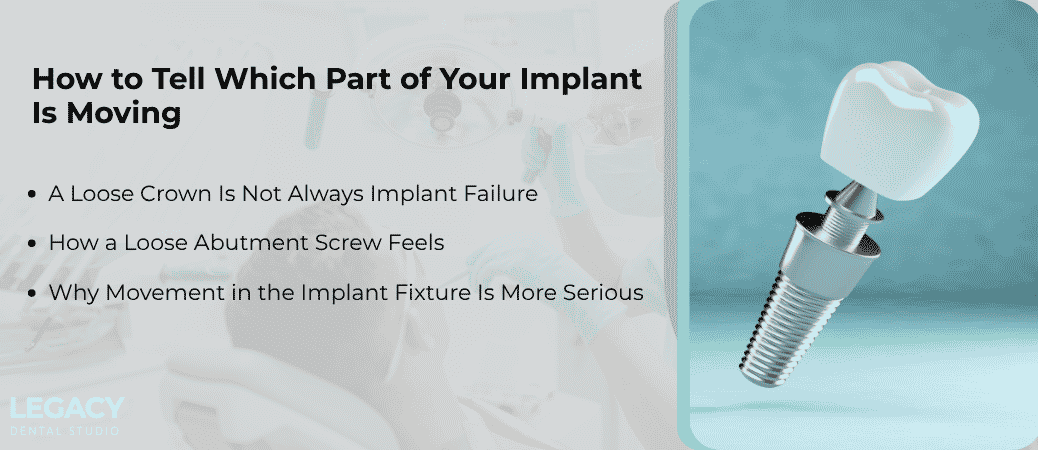
Three separate parts can move, and each one carries a different level of urgency. The crown sits on top, the abutment connects it downward, and the implant post is anchored in your jawbone.
Patients almost never identify the right part on their own. What feels like a spinning implant is usually a crown rotating on a stable post, and what feels like a minor click can occasionally be something deeper.
A Loose Crown Is Not Always Implant Failure
A loose implant crown is the most common and most fixable version of this problem. Cemented crowns come free when the dental cement breaks down over time, a cement failure that leaves the abutment and post untouched underneath.
You might notice the crown lifting slightly when you floss, or a click when you bite. If it comes off completely, save it in a clean container and bring it with you, much like you would with any crown that falls off unexpectedly.
Re-cementing or replacing the crown often takes one short visit.
How a Loose Abutment Screw Feels
A loose abutment screw usually produces a subtle rocking or a rotating sensation when you press on the tooth. The whole restoration seems to twist slightly, then settle back.
Screw loosening is a well-documented mechanical complication. One clinical review reports screw loosening rates of 5% to 12% for single-tooth implant crowns over follow-up periods ranging from 1.2 to 7 years.
A dentist removes the crown, checks the screw and any worn abutment parts, and retightens to the manufacturer's torque specification.
Why Movement in the Implant Fixture Is More Serious
A loose implant post means the bone is no longer holding the fixture firmly. The entire unit, crown and all, moves as one piece when you press on it.
This points to bone loss, infection, or a bond that never formed properly. A loose implant fixture needs evaluation within days, because the surrounding bone continues to change while the movement persists.
What Causes Instability Around an Implant?
Instability comes from infection, force, or a bond between bone and implant that never fully formed. Sorting out which one is at play shapes everything about the treatment plan.
Peri-Implantitis and Progressive Bone Loss
Peri-implantitis is the leading cause of late implant loosening. Bacteria collect under the gumline, inflammation sets in, and the bone supporting the implant slowly breaks down.
Early signs are easy to miss: puffy or bleeding gums, tenderness, receding gums that expose more of the abutment. Because a history of gum disease raises your risk, telling your dentist about past periodontal treatment helps them monitor the right things.
Failed Osseointegration During Healing
Osseointegration is the process where bone grows tightly against the implant surface during the first few months. When that bond does not form, the implant stays mobile from the start.
Smoking, uncontrolled diabetes, certain medications, and infection during healing all interfere with the process. Failed osseointegration usually shows up within the first year, sometimes before the final crown is even placed.
Grinding, Clenching, and an Uneven Bite
Teeth grinding puts far more force on an implant than normal chewing does. Because implants lack the shock-absorbing ligament that natural teeth have, those excessive biting forces travel straight into the screw and bone.
An uneven bite concentrates pressure on one implant. If your restoration feels "high" or you catch yourself clenching during the day, mention it, since a bite adjustment is often quick.
Bone Quality, Health Conditions, and Placement Factors
Softer bone in the upper back jaw offers less initial grip than dense bone elsewhere. Bone quality influences how much healing time an implant needs before it carries a crown.
Systemic health issues also play a role. Uncontrolled diabetes, immune conditions, and heavy tobacco use are all linked to higher rates of dental implant failure, and angle or depth of placement affects long-term load distribution.
How Does a Dentist Fix a Loose Implant?
Treatment follows the diagnosis, and the diagnosis starts with hands-on testing plus imaging. A dentist or implant specialist first determines which component moves, then addresses infection and bone support as needed.
Examination, Imaging, and Bite Evaluation
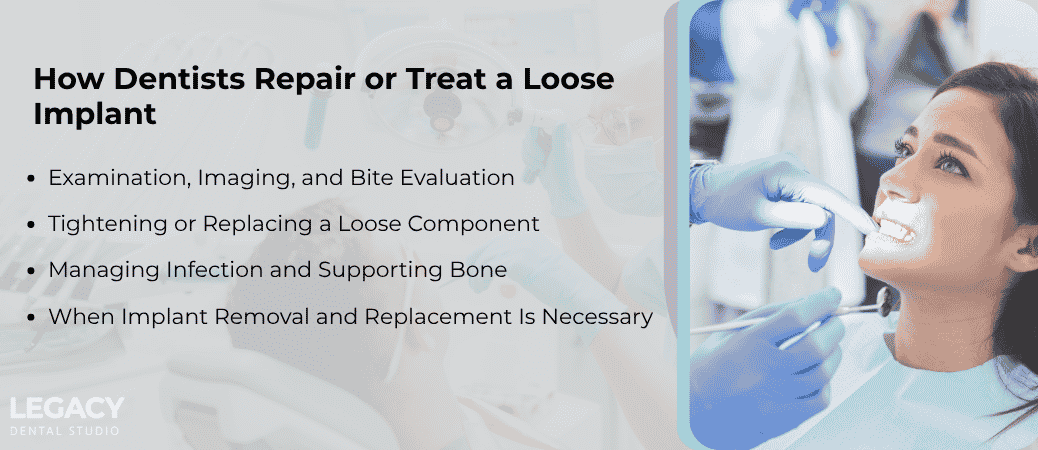
An experienced dentist like Dr. George Saleeb can evaluate the crown, abutment, implant post, surrounding bone, and bite to determine where the movement is coming from.
X-rays or a 3D scan show bone levels around the implant threads and reveal a fractured screw or a gap under the crown. A bite evaluation with marking paper identifies whether one spot takes more force than it should.
Your medical history matters here too. Blood sugar control, medications, and smoking all shape the plan, which is why the first visit includes a full health review.
Tightening or Replacing a Loose Component
When the implant post is solid, repairs are usually straightforward. A loose abutment screw gets retightened with a torque wrench to the exact setting the implant system requires.
A worn abutment or a stretched screw gets replaced with a new one. A crown that lost its cement is cleaned, checked for cracks, and re-bonded, or remade if the fit has changed.
Your dentist may adjust the bite at the same visit so the repaired part does not loosen again.
Managing Infection and Supporting Bone
Peri-implantitis treatment may include professional cleaning of the implant surface and other treatments based on the severity of the infection and bone loss.
If bone has been lost, bone grafting can rebuild support around a stable implant. Success depends on how much bone remains and how well the inflammation responds.
When Implant Removal and Replacement Is Necessary
An implant that moves inside the bone cannot be tightened back into place. Implant removal is the appropriate step when failed osseointegration or advanced bone loss has left the fixture without support.
Removal is usually less involved than the original placement. If you feel anxious about another procedure, ask whether sedation dentistry may be appropriate for you.
After healing, and often after bone grafting, replacement with a new implant may be possible. Your dentist will determine the timing based on how the site heals.
How Can You Lower the Risk of Future Problems?
Daily cleaning around the gumline, protection from grinding forces, and regular professional checks address the three things most likely to loosen an implant. Small habits carry a lot of weight over a decade of use.
Keep the Gumline and Restoration Clean
Bacteria at the gumline drive peri-implantitis, so that margin is where your attention belongs. Brush twice daily with a soft brush, angling the bristles toward the gum.
An interdental brush sized to your gap sweeps the sides of the abutment better than floss alone. A water flosser reaches under bridges and multi-unit restorations where bristles cannot go.
Consistent oral hygiene also protects the neighboring natural teeth from gum disease, which keeps the whole area healthier.
Protect the Implant From Grinding Forces
If you grind or clench, a custom night guard spreads the force across many teeth instead of loading the implant. Store-bought guards fit loosely and sometimes make clenching worse.
Watch for morning jaw soreness, worn edges on your front teeth, or a partner who mentions grinding sounds. Bruxism is manageable once identified, and reducing excessive biting forces protects both implants and natural teeth.
Ask for a bite check any time a restoration starts to feel high or different.
Keep Up With Professional Implant Checkups
Implants need their own maintenance schedule, generally every six months. Hygienists use instruments that clean the implant surface without scratching the titanium.
Each visit includes probing around the implant, checking for movement, and periodic X-rays that catch bone changes before you feel anything. Booking routine dental checkups at Legacy Dental Studio keeps that monitoring on track.
Early Evaluation Gives Your Implant the Best Chance
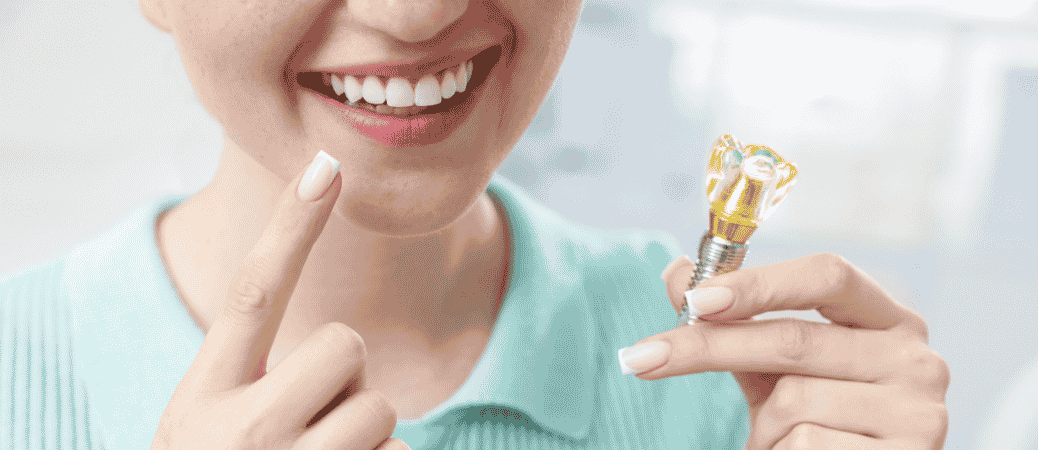
Movement in an implant deserves attention within days, not months. A crown that has come loose or a screw that has backed out is often repaired in one visit, while a post moving in the bone calls for a more involved plan.
An in-person exam with imaging and a bite check is the only reliable way to know which one you are dealing with. That same exam tells your dentist whether the cause is mechanical, infectious, or related to bone support, and each answer points to a different treatment.
Waiting rarely helps. Pain, swelling, or a fully detached crown may require emergency dentistry, and even a quiet wobble is worth having evaluated.
If something feels off with your implant, reach out to Legacy Dental Studio to schedule an evaluation and get a clear answer about what is moving and why.
Frequently Asked Questions
Is a loose dental implant an emergency?
Treat it as urgent, and as a true emergency if you have swelling, pain, pus, bleeding, or a crown that fell off.
Even without those symptoms, a loose dental implant should be examined within a few days, since continued movement can stress the bone and damage the screw threads.
Can a loose dental implant be saved?
Many can, particularly when the movement comes from the crown or abutment screw and the post itself is stable.
When bone loss or failed integration is the cause, the outcome depends on how much support remains, so your dentist will only know after examining the site and reviewing imaging.
How can I tell if my implant crown or the implant post is loose?
You cannot reliably tell at home, which is exactly why an exam matters. A dentist holds the crown steady and tests the post separately, then confirms with an X-ray, and a spinning or clicking sensation usually turns out to be a loose implant crown or screw rather than a failing post.
Why is my dental implant loose after two years?
Loosening at the two-year mark points most often to a screw that has gradually backed out under chewing forces, or to early peri-implantitis.
Grinding, an uneven bite, and plaque buildup at the gumline are the usual contributors, and imaging will show whether bone levels have changed.
How much does it cost to fix a loose dental implant?
The exact cost cannot be determined until a dentist examines the implant and identifies which part is causing the problem.
Retightening a screw sits at the low end, while implant failure requiring removal, grafting, and a new fixture sits at the high end; your dentist can give you a written estimate once the diagnosis is clear.